What's Up? - Ohio Skylights February 2026
What is up in the sky this month?
Happy February everyone! I hope we all made it through the winter storm alright. We’re starting off the month with sunrise at 7:40am and sunset at 5:51pm. On February 28th, we’ll be ending the month with sunrise at 7:06am and 6:22pm.
On the night of February 28th, we will see six planets right after sunset. Mercury, Venus, Jupiter, Saturn, Uranus, and Neptune will all be visible, with the first four able to be viewed by the naked eye. On February 1st, there will be a full moon, and on February 17th, a new moon. February 19th will yield the best time to view Mercury as it will be at its highest location above the horizon in the night sky.
February is a part of what is known as “galaxy season” in the Northern Hemisphere. This is when the Earth is facing away from the center of the Milky Way, meaning that there are fewer stars in between Earth and extragalactic space. This yields good conditions for observing other galaxies, a popularly observed one being the Andromeda Galaxy.
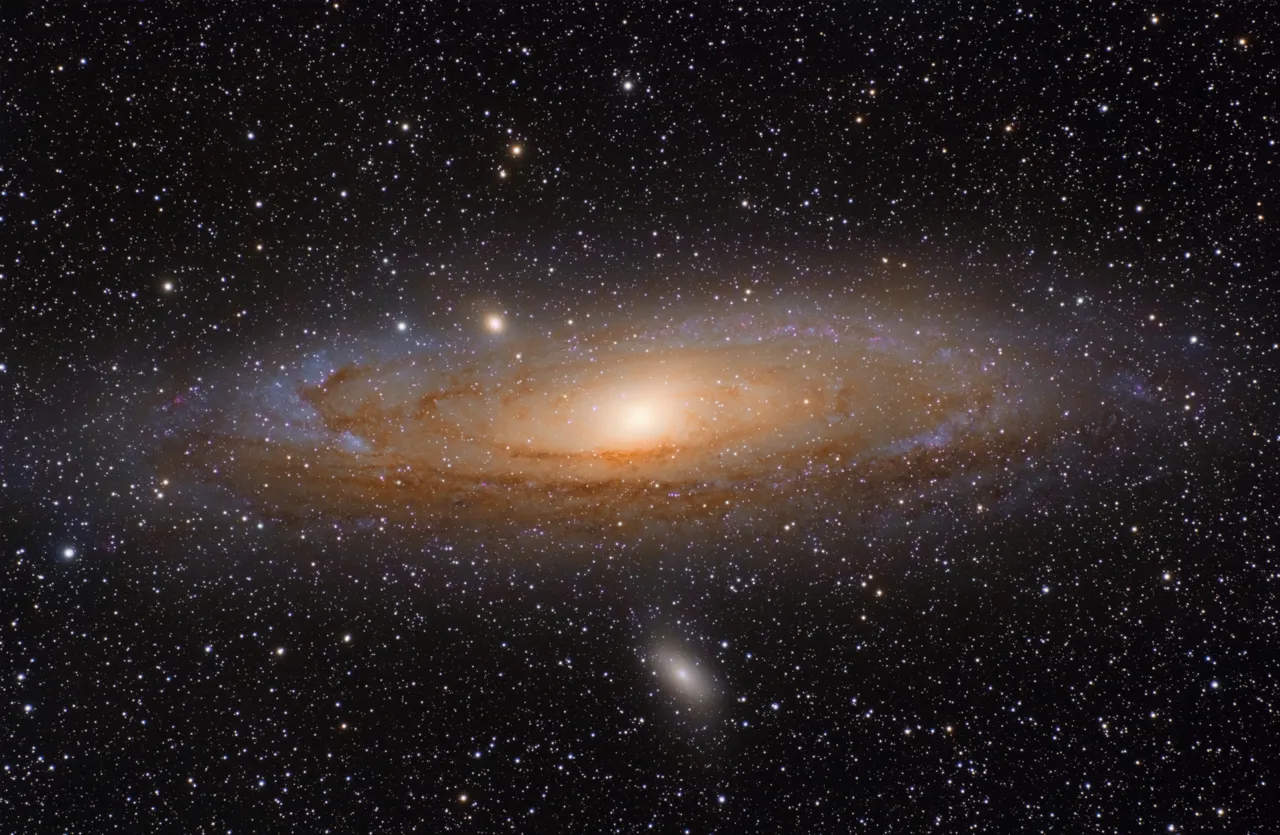
Wikipedia: The Andromeda Galaxy is the closest galaxy to Earth at 2.5 million light-years away. Brody Wesner

Sources:
- https://www.nasa.gov/blogs/watch-the-skies/2026/01/16/most-notable-2026-astronomical-events-a-year-of-watching-the-skies/
- https://www.timeanddate.com/sun/usa/columbus?month=2
- http://www.seasky.org/astronomy/astronomy-calendar-2026.html
- https://www.rmg.co.uk/stories/space-astronomy/space-astronomy-highlights-2026#February
- https://earthsky.org/astronomy-essentials/star-seasonal-appearance-brightness/
